19 Nov, 2026
How to Improve Interview Communication Skills: 12 Proven Ways to Master Interview Skills
You have the degree. You have the experience. Your resume got you the call. And yet, the moment the interviewer […]

19 Nov, 2026
You have the degree. You have the experience. Your resume got you the call. And yet, the moment the interviewer says, “Tell me about yourself,” your mind goes blank.
Sound familiar?
Here is the truth most job seekers learn too late: getting hired is not only about what you know; it is about how well you communicate what you know. Hiring managers meet dozens of candidates with similar qualifications. The ones who get the offer are usually the ones who explain their value clearly, answer with confidence, and connect with the interviewer.
That is why strong interview skills, and especially interview communication skills, are the most powerful tools in your job search. The good news? Communication is a skill, not a talent. Like any skill, it can be learned, practiced, and perfected.
Before the interview, find out:
This is the most common opening question and your best chance to control the first impression. Many candidates ramble through their life story. Instead, use a simple present, past, and future formula:
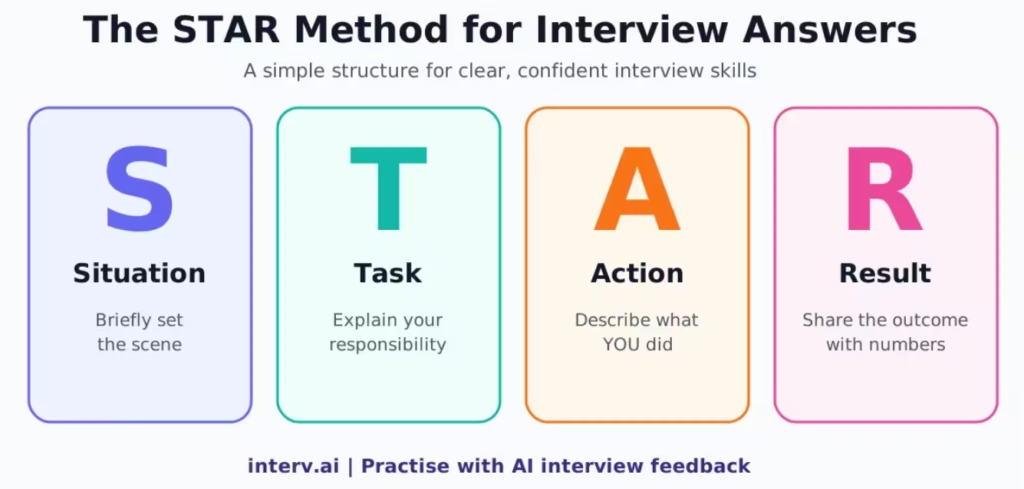
Questions such as “Tell me about a time you faced a conflict at work” test how you think and act. The STAR method gives your answer a clear structure:
For example: “Our monthly reports were taking three days (Situation). I was asked to speed up the process (task). I built an automated dashboard and trained the team to use it (Action). Reporting time dropped from three days to four hours (Result).”
Try these fixes:
Recording your practice sessions and counting your filler words is one of the fastest ways to improve.
Good examples include:
This is where real improvement happens. Reading tips is helpful, but nothing builds interview skills like realistic practice with honest feedback.
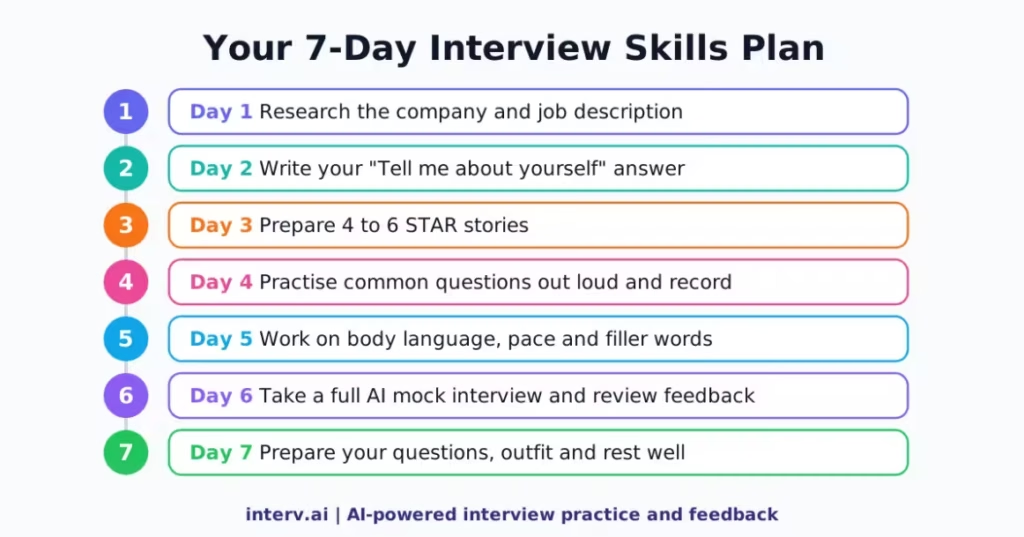
Focus on structure and practice. Learn the STAR method, rehearse common questions out loud, record yourself to catch filler words and do at least one mock interview with feedback. Even a few focused days of practice can make a big difference.
Employers look for clear communication, problem-solving, confidence, active listening, teamwork, adaptability, and genuine enthusiasm for the role.
Prepare well, practice breathing exercises, arrive early, and remind yourself that the interviewer wants you to succeed. Regular mock interviews also reduce anxiety by making the situation feel familiar.
Most answers should last between one and two minutes. The “Tell me about yourself” answer can run up to 90 seconds. Be complete but concise.
Yes. AI-powered platforms such as Interv provide realistic practice and feedback, helping you improve your answers, delivery, and confidence without the pressure of a real interview.
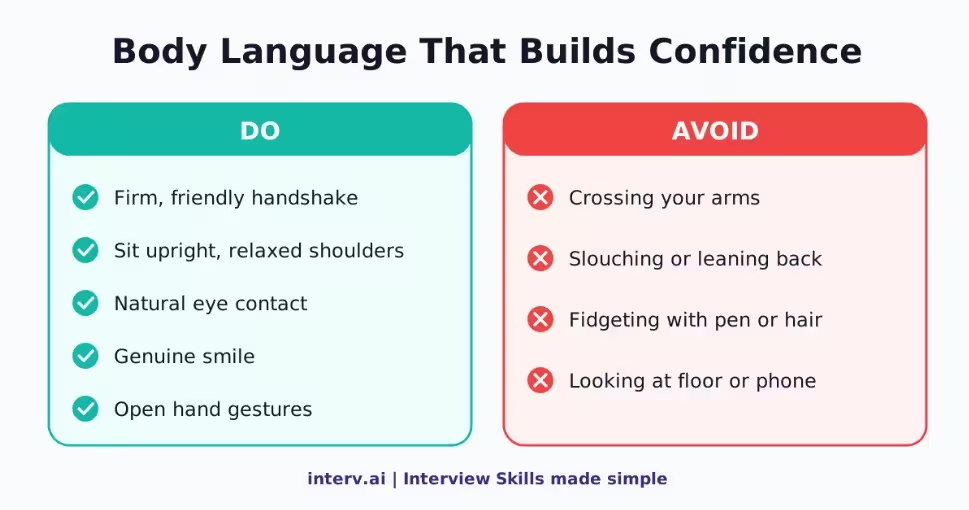
Absolutely. Eye contact, posture, and facial expressions influence how confident and trustworthy you appear, both in person and on video calls.
Every interview is a chance to learn and grow. The more you practice, the stronger your interview skills become, and the closer you get to your dream job.